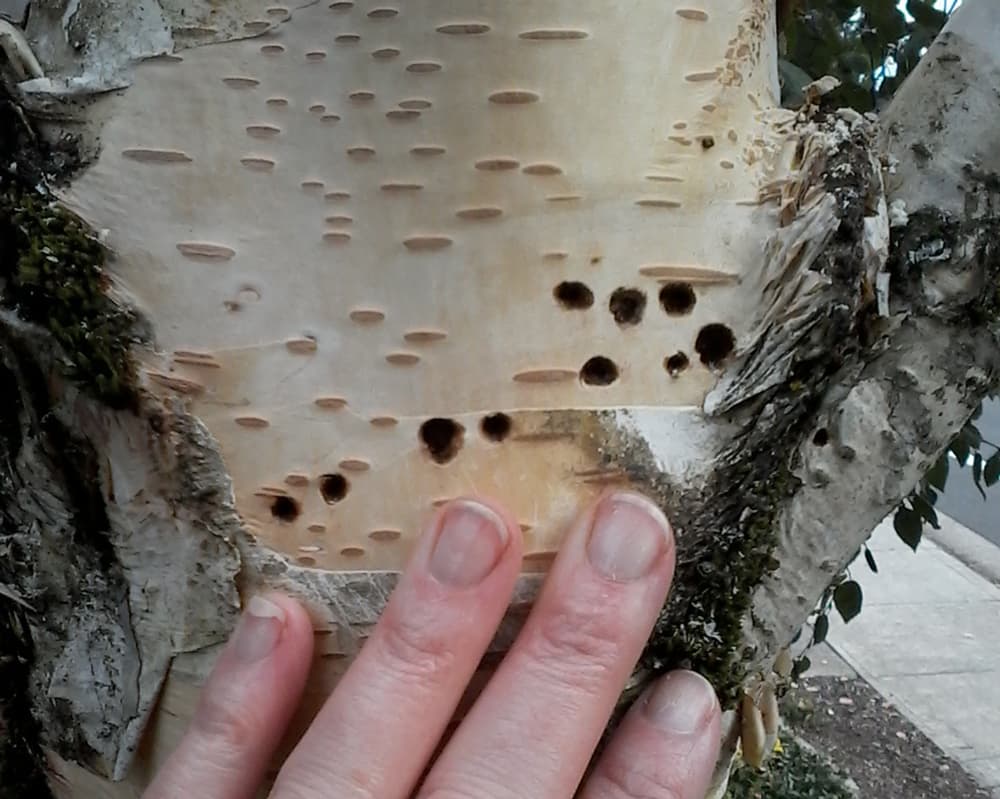
If the birch trees on your Rockford-area property have been thinning at the top, or if branches are dying back progressively from the crown downward, Bronze Birch Borer may be the cause. This native beetle is one of the most destructive insects affecting birch trees in Northern Illinois and Southern Wisconsin, and it has accelerated its damage across the region as birch populations have been stressed by drought and warmer growing seasons.
What Is Bronze Birch Borer?
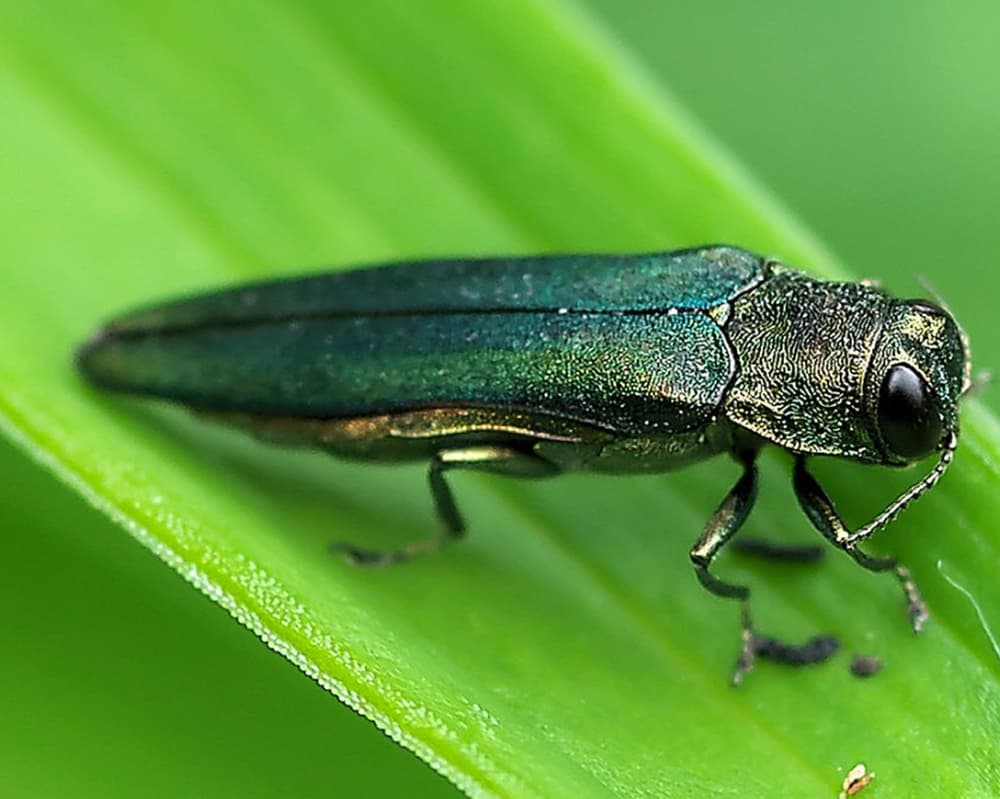
Bronze Birch Borer (Agrilus anxius) is a metallic wood-boring beetle in the same family as Emerald Ash Borer. Adult beetles are slender, olive-bronze in color, and about ¼ to ½ inch long. They emerge in late May through July, feed briefly on birch foliage, and then females lay eggs in bark crevices. The larvae — which do the actual damage — bore into the inner bark and create winding galleries that disrupt the tree's vascular system.
Those larvae feed on the cambium, the thin layer of living tissue that moves water and sugars through the trunk. As the tunnels widen, they girdle the tree from the inside and the crown dies back faster than the tree can replace it. That is why Bronze Birch Borer is the most common reason mature birches decline and die across our service area.
Which Birch Species Are Affected?
All birch species are susceptible, but some are significantly more vulnerable than others:
- European White Birch (Betula pendula) — Highly susceptible; frequently planted in Illinois landscapes but struggles in Midwest heat and drought
- Paper Birch (Betula papyrifera) — Native to cooler climates; susceptible when stressed by heat
- River Birch (Betula nigra) — Most heat-tolerant and least susceptible; the preferred species for Northern Illinois plantings
- Heritage River Birch — Bred for heat and drought tolerance; the most BBB-resistant option for Midwest landscapes
Signs of Bronze Birch Borer Infestation
Bronze Birch Borer attacks stressed trees first — particularly those suffering from drought, soil compaction, or poor site conditions. Symptoms progress in a predictable pattern:
- Dieback from the top down. Crown thinning and branch death beginning at the top of the tree and working downward over multiple seasons.
- D-shaped exit holes. Tiny, flat-sided D-shaped holes in the bark where adult beetles have emerged. These are diagnostic for borer activity.
- Serpentine galleries. Irregular, winding galleries visible in the inner bark beneath peeling or damaged outer bark.
- Bark swelling or splitting. The cambium layer responds to larval feeding with callus tissue formation, which can cause visible ridges or splits in the outer bark.
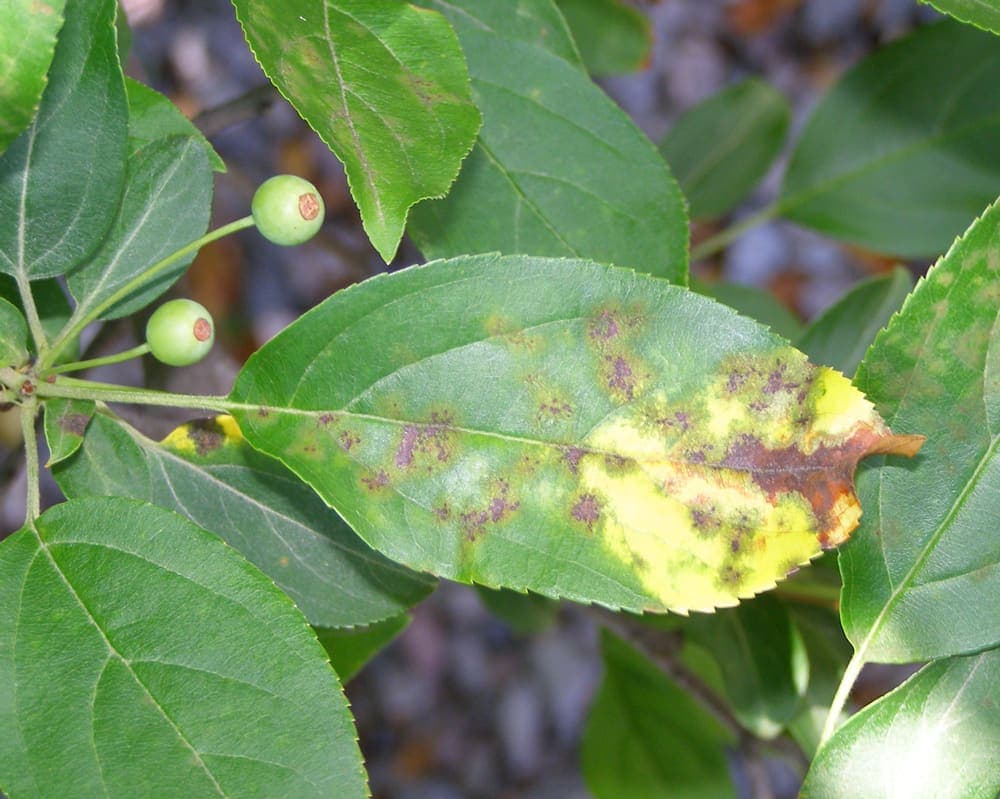
- Yellowing or sparse foliage. Canopy stress visible as smaller-than-normal leaves, early fall coloration, or reduced leaf density.
In practice, the first thing homeowners notice is thinning at the very top of the tree: leaves in the crown turn sparse or yellow in mid-summer while the lower branches still look healthy, and the dieback works its way downward season by season. Look closely at the trunk and larger limbs for raised, winding ridges under the bark where larvae have tunneled, and for D-shaped exit holes roughly an eighth of an inch across, left by adult beetles emerging in early summer.
Trees already under stress from drought, compacted soil, root damage from construction, or planting in a hot, exposed lawn are attacked first. A stressed birch cannot flood new tunnels with sap and kill the larvae the way a vigorous tree often can.
Treatment Options
Treatment depends on how far the infestation has progressed. If less than about a third of the crown has died back, the tree is usually worth treating, and trees that still retain 50% or more of their canopy remain candidates. Trees with severe crown loss or extensive gallery damage in the lower trunk are typically not treatable and should be evaluated for removal to prevent hazard. If a birch is past saving, we will tell you so and talk through removal and a replacement species better suited to the site, rather than sell you a treatment program that will not work.
Systemic insecticide treatments: Soil-applied or trunk-injected systemic insecticides — similar to those used for EAB — are the most effective management option. These products move through the tree's vascular system and are ingested by larvae feeding in the inner bark. Emamectin benzoate (TREE-age®) and imidacloprid-based products are commonly used, with treatment frequency and timing determined by product and tree condition. Timing matters: the application needs to be in place before adult beetles lay eggs in late spring and early summer, and treatments are usually repeated over consecutive seasons, because a single application does not clear an established population.
Preventive treatment for high-value trees: In areas where BBB is active, preventive systemic treatment of healthy, high-value birch trees — especially stressed European White Birch — can extend their life significantly. Our arborists can help you assess whether your trees are candidates for preventive care.
Improving tree health: Because BBB targets stressed trees, improving overall tree vigor through proper watering, mulching, and soil care can meaningfully reduce a tree's vulnerability — especially during drought years. Alongside treatment, we address the stress that invited the beetle in: watering the tree properly through dry spells, mulching to cool and protect the root zone, removing turf competition at the base, and pruning out dead wood — always outside the beetle's flight period, so that fresh cuts do not attract egg-laying adults.
Species replacement planning: For properties with highly susceptible European White Birch trees in decline, our arborists can help develop a phased replacement plan using more resilient species suited to Northern Illinois conditions.
When to Call a Certified Arborist
If you've noticed yellowing from the top down, thinning foliage, or D-shaped exit holes in your birch trees, don't wait. Tree Care Enterprises' certified arborists can assess your trees, determine the extent of any infestation, and recommend the most effective treatment plan. We serve Rockford, Machesney Park, Loves Park, Rockton, Belvidere, and the surrounding Northern Illinois and Southern Wisconsin region.
Early summer, when crown thinning first shows and exit holes are fresh, is the most useful time for an inspection, but we can assess a birch at any point in the season. Our arborist will examine the trunk and crown, tell you what proportion of the tree is still viable, and give you a written recommendation with the cost of treatment before any work is scheduled.
Contact Tree Care at (815) 965-5757 to schedule your consultation.