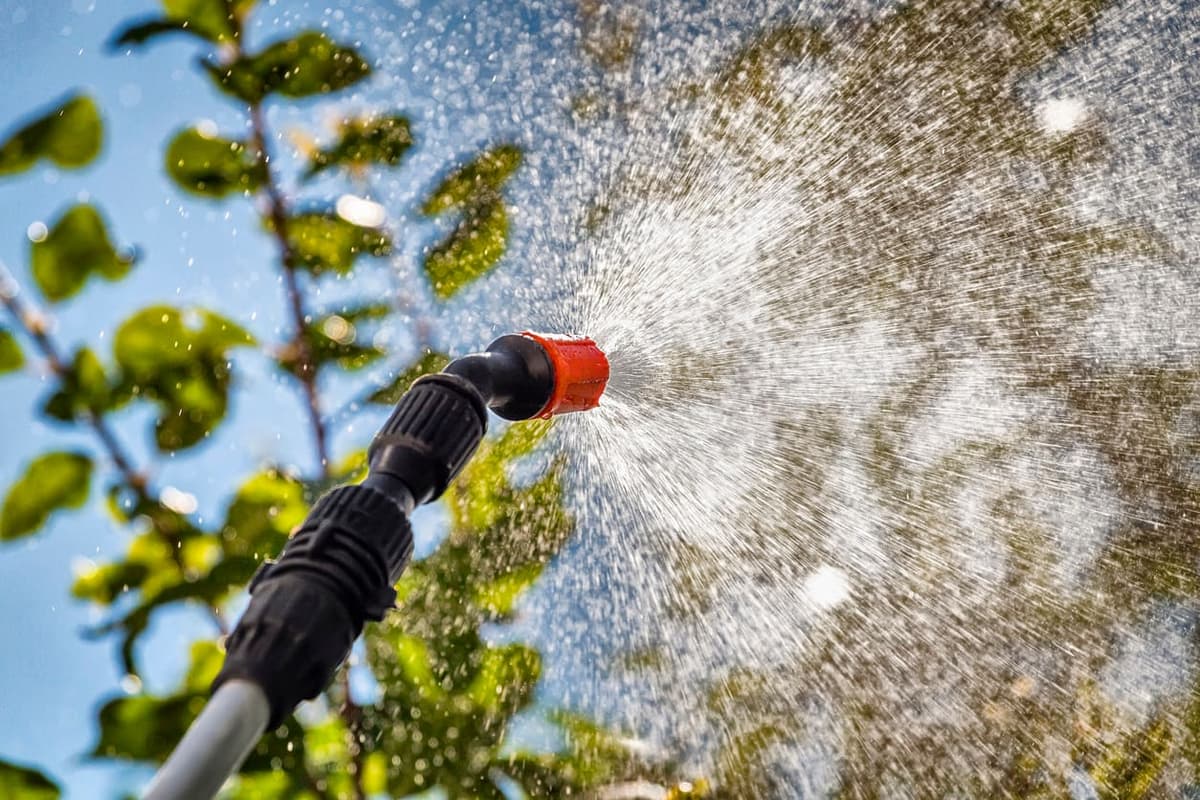
Fertilization
Assess soil and tree health, then supply nutrients where a deficiency calls for treatment.
Tree Fertilization in Rockford, IL & the Surrounding Region
Trees growing in urban and suburban landscapes face challenges that forest trees never encounter: compacted soils, root competition, impervious surfaces, and nutrient depletion.
We have served the Rockford area since 1978 and hold TCIA accreditation.
Why Urban Trees Need Supplemental Fertilization
In a natural forest, trees recycle nutrients continuously through leaf litter decomposition. In managed landscapes, leaf cleanup, turf competition, and soil compaction interrupt this cycle. Northern Illinois soils — particularly the heavy clay soils common in Rockford, Machesney Park, and surrounding communities — are often compacted and low in organic matter, limiting the movement of water, air, and nutrients through the root zone.
Trees under nutrient stress show it in their foliage: pale or yellowing leaves (chlorosis), stunted annual growth, dieback in the upper canopy, and greater susceptibility to secondary invaders like borers and pathogens. Corrective fertilization, when properly timed and applied, can reverse these symptoms and substantially extend a tree's productive life.
Deep-Root Liquid Injection Fertilization
Our primary fertilization method is deep-root liquid injection — a technique that uses a pressurized probe inserted 8–12 inches into the soil at regular intervals along the drip line. Liquid fertilizer is delivered directly into the root zone, bypassing competition from surface grass roots and penetrating compacted soil layers that surface broadcasting cannot reach.
We customize fertilizer formulations based on soil analysis and the specific needs of each tree species. A mature red oak recovering from drought stress requires a different nutrient profile than a young silver maple planted in a new subdivision. Our ISA Certified Arborists — John Richards (IL-0027A), Doug Edwards (IL-0504A), Matt Richards (IL-9831A), Jeremy Montana (IL-4690A), and Pete Montana (IL-4689A) — evaluate each tree's condition before recommending a program.
Key Nutrients and What They Do
- Nitrogen (N): Drives vegetative growth, foliage density, and overall vigor. Often the most limiting nutrient in managed landscapes.
- Phosphorus (P): Supports root development and energy transfer — especially important for transplanted or recently disturbed trees.
- Potassium (K): Regulates water use, strengthens cell walls, and improves drought and cold tolerance.
- Iron and Manganese: Micronutrients that become unavailable in high-pH or poorly drained soils. Iron deficiency (interveinal chlorosis) is common in oaks and pin oaks throughout the Rockford area.
- Organic Amendments: Humic acids and biostimulants help restore microbial activity in depleted urban soils.
Timing and Fertilization as Part of Plant Health Care
Late fall — after leaf drop but before the ground freezes — is generally the best time for deep-root fertilization. Roots continue metabolic activity after the tree goes dormant, absorbing stored nutrients that fuel early spring growth. A second application in early spring, just before bud break, can accelerate recovery in stressed trees.
Fertilization is most effective as one component of a broader plant health care approach. A tree that is also dealing with EAB pressure, girdling roots, or soil compaction will respond better to fertilization once those primary stressors are addressed. Our arborists can integrate fertilization with insect treatments, root collar excavations, soil aeration, and irrigation recommendations into a coordinated care plan.
If your trees show signs of nutrient stress, or if you'd like a baseline health evaluation, call 815-965-5757 to schedule a free consultation. We serve Rockford, the Lake Geneva area, and communities throughout Winnebago, Boone, McHenry, Walworth, and Rock Counties.
Related Guide: Why Your Trees Need Professional Fertilization — And When to Start