Rockford, IL sits in USDA Hardiness Zone 5b — winters that drop to -10°F to -15°F most years, summers that hit the upper 80s with stretches of 95°F+, and roughly 38 inches of annual precipitation distributed unevenly. The plants that thrive long-term in this climate are mostly the ones that evolved here. Native species require less water once established, support local pollinators and birds, and tolerate the freeze-thaw cycles and clay soils that kill imported ornamentals within a few seasons.
This is a working list of natives we recommend regularly on Rockford-area landscape projects, grouped by site condition. None require irrigation after the establishment season. All tolerate northern Illinois winters without protection.
Why Native Plants Make Sense Here
A few practical advantages of natives over non-native ornamentals in northern Illinois landscapes:
- Drought tolerance once established. A native oak doesn't need supplemental irrigation through July droughts; a Japanese maple does.
- Pest and disease resistance. Plants that evolved here have evolved alongside the local insects and pathogens. Imported ornamentals often haven't.
- Soil tolerance. Most natives handle Rockford clay; many ornamentals require amended soil and break down when the amendments wash out.
- Pollinator support. Native bees, butterflies, and moths are adapted to specific native plant species. Generic landscape plants don't feed them.
- Lower long-term maintenance. Less spraying, less watering, less replacement.
The trade-off is aesthetic flexibility. A landscape designed entirely from natives looks different from a "traditional" suburban landscape — looser, more textured, more seasonal. That's a feature for some homeowners and a bug for others. Good design integrates natives with selected non-natives where appropriate; rarely is the right answer 100% one or the other.
Native Trees for Rockford Landscapes
The structural anchors of a landscape. Tree selection is a 50+ year decision; choose carefully.
Oaks
Bur Oak (Quercus macrocarpa). The most drought- and storm-tolerant oak in our region. Massive, long-lived, deeply rooted. Slow-growing — plan for the size at 30 years, not 5. Excellent specimen tree on lots large enough to accommodate the 60–80 foot mature spread.
White Oak (Quercus alba). Refined branch structure, brilliant fall color (deep red to russet). Slightly less drought-tolerant than bur oak but more graceful. Acidic-soil preference; struggles in heavily alkaline conditions.
Swamp White Oak (Quercus bicolor). Tolerates wet soils that kill other oaks. Faster growing than bur or white oak. Excellent street and yard tree where there's seasonal saturation.
Red Oak (Quercus rubra). Faster-growing oak with red fall color. Common throughout the Rockford area's mature canopy. Less storm-tolerant than bur oak.
Maples
Sugar Maple (Acer saccharum). Northern Illinois' classic shade tree. Brilliant fall color, dense canopy, long-lived. Sensitive to road salt and compacted soils — site carefully.
Black Maple (Acer nigrum). Closely related to sugar maple, slightly more drought-tolerant. Often listed as a sugar maple variant.
Other Native Trees
American Elm (Ulmus americana — DED-resistant cultivars). Modern Dutch Elm Disease-resistant cultivars (Valley Forge, Princeton, New Harmony) restore the classic vase-shaped American elm to the landscape. Specify a DED-resistant cultivar specifically; standard American elm dies from DED within 5–15 years.
River Birch (Betula nigra). Tolerates wet sites that kill other birches. Multi-trunk form is dramatic; exfoliating bark adds winter interest. Avoid Bronze Birch Borer-prone single-trunk paper or white birch.
Eastern Redbud (Cercis canadensis). Spring magenta bloom before leaves emerge. Small-to-medium understory tree. Tolerates light shade and clay soils.
Serviceberry (Amelanchier × grandiflora 'Autumn Brilliance'). Spring white bloom, edible early-summer berries (popular with birds), brilliant red-orange fall color. Excellent specimen for smaller landscapes.
Black Cherry (Prunus serotina). Native, common, supports significant wildlife. Often considered "weedy" — but in the right landscape role, the late-spring bloom and fall color earn its place.
Native Shrubs
Full Sun Shrubs
Ninebark (Physocarpus opulifolius). Native shrub with exfoliating bark, white spring bloom, red-orange fall color. Cultivars include 'Diabolo' (purple foliage), 'Summer Wine' (compact, dark foliage), 'Nugget' (gold foliage). Tough — handles clay, drought, full sun, partial shade.
Smooth Hydrangea (Hydrangea arborescens). Native to the eastern U.S., naturalizes well in Illinois. Cultivars include 'Annabelle' (large white blooms) and 'Incrediball' (larger, sturdier stems). Excellent for partial shade.
Sumac (Rhus typhina or Rhus aromatica). Brilliant fall color. Staghorn sumac is taller and more dramatic; fragrant sumac (Rhus aromatica) stays low and works as a groundcover on slopes.
New Jersey Tea (Ceanothus americanus). Compact native shrub with white summer bloom. Excellent in dry, sunny sites.
Shade Shrubs
Native Viburnums. Several species are excellent for Rockford-area landscapes:
- Viburnum dentatum (Arrowwood) — versatile, white spring bloom, blue-black fall berries
- Viburnum trilobum (American Cranberrybush) — bright red fall berries persist through winter
- Viburnum prunifolium (Blackhaw) — small tree-form viburnum, excellent specimen
Witch Hazel (Hamamelis virginiana). Late-fall yellow bloom (one of the only natives blooming in October–November). Multi-stem form to 10–15 feet. Tolerates light to medium shade.
Spicebush (Lindera benzoin). Native understory shrub. Yellow spring bloom, red-orange fall color, fragrant foliage when crushed. Host plant for spicebush swallowtail butterfly.
Native Perennials
Sun Perennials
Coneflowers (Echinacea purpurea, E. pallida). The iconic prairie perennial. Long bloom (June–September), drought-tolerant once established. Cultivars in many colors but the straight species supports pollinators best.
Black-Eyed Susan (Rudbeckia hirta, R. fulgida). Bright yellow bloom mid-to-late summer. Easy, reliable, tolerant of clay and drought.
Bee Balm (Monarda fistulosa, M. didyma). Excellent pollinator plant. Wild bergamot (M. fistulosa) is the more drought-tolerant species and a better choice for most Rockford-area sites.
Aster (Symphyotrichum species). Late-season bloom (September–October) when most perennials are done. Critical for pollinators preparing for winter.
Prairie Dropseed (Sporobolus heterolepis). Ornamental grass native to Illinois prairies. Fine texture, fragrant fall foliage, exceptional drought tolerance. One of the most versatile native grasses for residential landscapes.
Little Bluestem (Schizachyrium scoparium). Compact native grass with blue-green summer color shifting to red-bronze in fall. Excellent in dry, sunny sites.
Switchgrass (Panicum virgatum). Taller native grass with airy summer flower panicles. Cultivars include 'Northwind' (upright form), 'Shenandoah' (red-tinged foliage).
Shade Perennials
Wild Ginger (Asarum canadense). Native groundcover for dry to medium shade. Heart-shaped foliage, hidden spring blooms.
Wild Geranium (Geranium maculatum). Spring lavender-pink bloom in light shade. Naturalizes beautifully under oaks and maples.
Foamflower (Tiarella cordifolia). Native shade groundcover with white-pink spring bloom and excellent foliage texture year-round.
Christmas Fern (Polystichum acrostichoides). Evergreen native fern (rare among ferns). Excellent for dry shade.
Wild Columbine (Aquilegia canadensis). Spring red-and-yellow bloom. Tolerates dry shade — unusual for a flowering perennial.
Native Plants for Specific Conditions
Dry Shade (Under Oaks and Maples)
The hardest landscape condition. Most ornamentals fail here. Natives that work:
- Wild ginger
- Christmas fern
- Wild columbine
- Pennsylvania sedge (Carex pensylvanica) — native groundcover sedge
- Solomon's seal (Polygonatum biflorum)
Wet or Periodically Saturated Sites
- Swamp white oak
- River birch
- Native viburnums (V. trilobum especially)
- Joe Pye weed (Eutrochium maculatum)
- Cardinal flower (Lobelia cardinalis)
- Blue flag iris (Iris virginica shrevei)
Full Sun Hellstrip (Between Sidewalk and Street)
The harshest residential condition — salt, heat reflection, drought, foot traffic. Natives that survive:
- Little bluestem
- Prairie dropseed
- Black-eyed Susan
- Butterfly weed (Asclepias tuberosa)
- New Jersey tea
What to Avoid
A few non-natives common in the nursery trade that we recommend against for Rockford-area landscapes:
- Bradford Pear (Pyrus calleryana) and cultivars. Invasive, weak-wooded, prone to splitting in storms. Banned in some states.
- Norway Maple (Acer platanoides). Outcompetes native sugar maple, dense shade kills understory natives. Invasive.
- Burning Bush (Euonymus alatus). Invasive — escapes into woodlands and outcompetes natives. Native alternatives with similar fall color: ninebark, sumac, oakleaf hydrangea.
- Japanese Barberry (Berberis thunbergii). Invasive; harbors deer ticks. Banned in some states.
- Most non-native Japanese maples. Beautiful, but heat-stressed in our summers and prone to scorch. Pick a native serviceberry or eastern redbud for similar size and ornamental impact.
How Tree Care Enterprises Uses Natives
On most landscape design-build projects in the Rockford area, we recommend a mix — typically 60–70% natives, 30–40% selected non-native ornamentals chosen for specific aesthetic or functional roles. Pure-native designs are wonderful for clients who want them; integrated designs are usually the right answer for most residential properties.
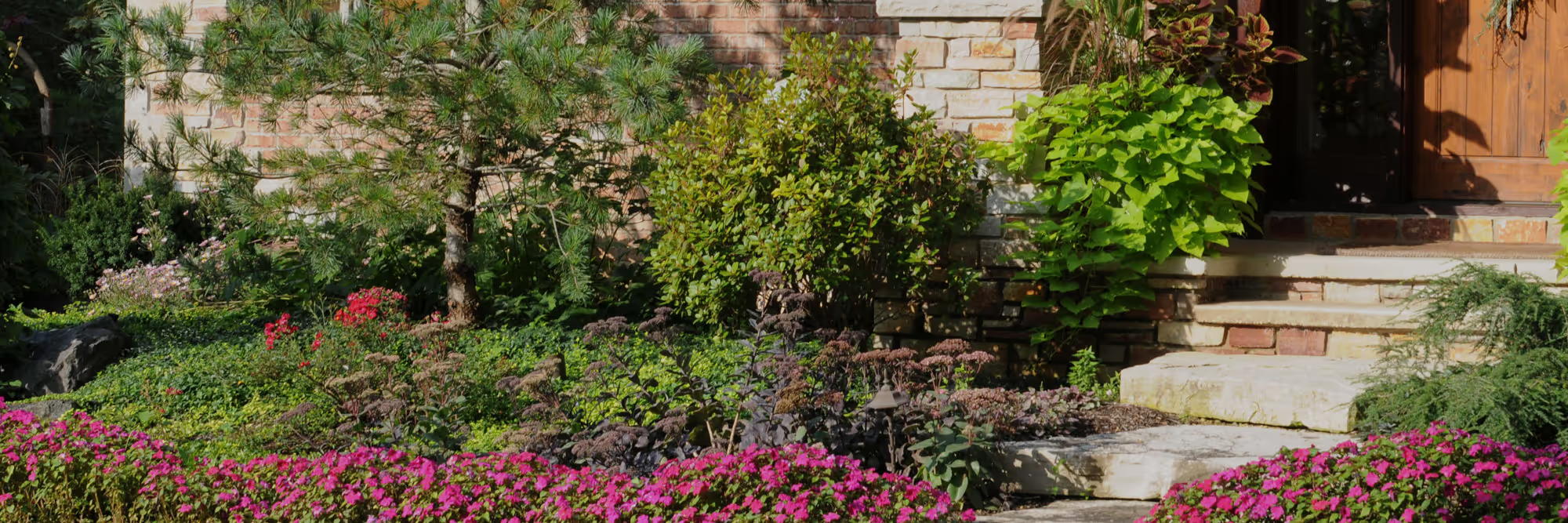
Native beds sit well against a paver patio in Rockford, IL, and we plan the two together.
Our ISA Certified Arborists consult on tree selection for every project, particularly when integrating new trees with existing mature canopy. The right tree in the right spot is a 100-year decision; the wrong tree in the wrong spot fails in three.
Get Help With Plant Selection in Rockford
Call 815-965-5757 or request a free consultation to discuss a landscape design project. We'll walk the site with you and recommend plant material specific to your soil, exposure, and aesthetic.
For more on our approach, see landscape design and build and tree preservation.