Retaining Walls in Rockford, IL
Retaining walls do two jobs: they hold back soil where there's a grade change, and they create useful flat space where there wasn't any before. Done right, they last decades. Done wrong, they fail catastrophically — bulging, leaning, eventually collapsing under hydrostatic pressure or undersized base. Tree Care Enterprises has been engineering and installing retaining walls across the Rockford area since 2000, and we walk new clients past plenty of failed walls we get called to replace.
When You Need a Retaining Wall
The most common drivers for retaining walls on Rockford-area properties:
- Sloped backyard you can't actually use. A wall converts a 15-degree slope into a flat patio or planting area.
- Erosion you keep losing topsoil to. Bare slopes shed soil with every heavy rain. A wall stops that and creates space for stabilizing plantings.
- Grade transition at the driveway or walkway. Walls allow you to step the grade cleanly between hardscape elements at different elevations.
- Foundation drainage and grade correction. If water grades toward your house, a wall (with proper drainage) can redirect it.
Materials We Build With
Segmental Block Walls
Manufactured concrete block systems (Unilock, Belgard, Techo-Bloc, Rosetta) are the workhorse for most residential walls. They install relatively quickly, look clean, come in a range of textures and colors, and engineer well for the heights we typically build in residential applications — 2 to 6 feet. For walls over 4 feet, we add geogrid reinforcement and detail drainage carefully.
Natural Stone Walls
For higher-end aesthetic, natural stone (limestone, sandstone, granite, fieldstone) creates a more organic, blended look. Stone walls can be dry-stacked or mortared depending on the design intent. They require more skilled labor to install properly but blend beautifully with mature landscapes.
Boulder Walls
Large boulder walls (sometimes called "armor stone") work well for tall transitions and rustic aesthetics. They require equipment to set, so site access matters more than for segmental block.
Engineering Considerations
This is where DIY retaining walls go wrong, and where we spend the most time during design. Factors that drive whether a wall stands or fails:
- Wall height. Walls over 4 feet in many municipalities require an engineered design and permit. We handle the engineering coordination.
- Geogrid reinforcement. For taller walls, layers of polymer mesh anchored back into the soil prevent overturning. Without geogrid, segmental walls over 4 feet are at high risk of failure.
- Base preparation. Compacted aggregate base, properly leveled, sized correctly for the wall height.
- Drainage. Water trapped behind a wall develops hydrostatic pressure that pushes the wall outward. We install perforated drain pipe at the wall base, wrapped in filter fabric and surrounded by drainage stone, daylighted to an outlet.
- Setback and batter. Walls lean slightly into the slope (batter) and step back per course on tall walls (setback). Both contribute to long-term stability.
Tree-Aware Wall Design
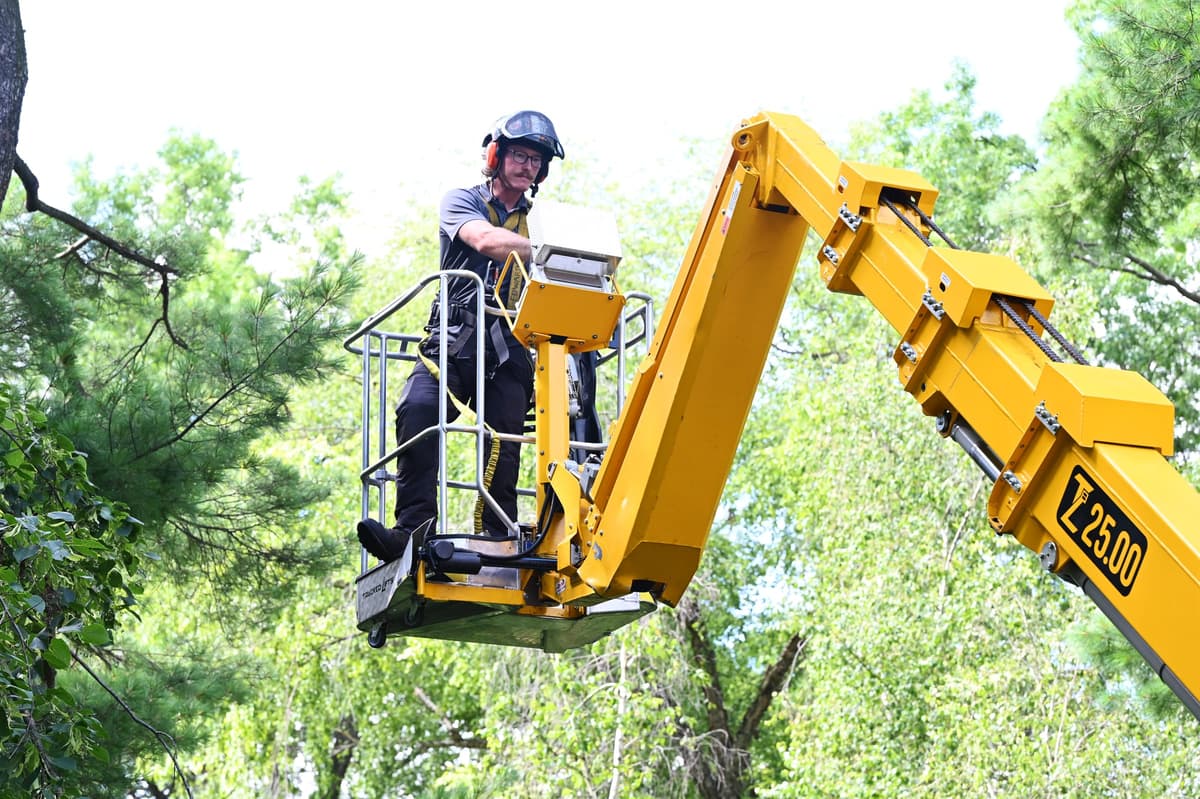
A retaining wall built within a mature tree's critical root zone can sever the structural roots that hold the tree upright. We've replaced multiple walls installed by contractors who didn't account for this — and we've assessed mature trees whose root systems were destroyed by adjacent wall excavation. Our ISA Certified Arborists consult on wall design near any tree larger than 6" trunk diameter. Sometimes the right answer is to move the wall. Sometimes it's to use a different construction method, like a free-standing dry-stack rather than a deep-footed wall. Sometimes it's to plan for tree removal as part of the project so the tree doesn't fail two years later.
Pricing Context
Retaining wall cost depends heavily on height, length, material, and engineering required. Rough range:
- Short decorative walls (under 3 ft), 20–40 ft long: $4,000–$12,000
- Functional walls (3–5 ft), 30–60 ft long: $12,000–$30,000
- Engineered tall walls (5+ ft) or multi-tier systems: $30,000–$80,000+
Drivers that change the number: wall height, length, material (natural stone roughly 1.5–2× the cost of segmental block for equivalent height), site access, and integration with stairs, lighting, or planters.
Common Wall + Hardscape Integrations
We frequently combine retaining walls with:
- Patios — wall doubles as seat wall edge
- Steps — integrated into the wall for grade transitions
- Lighting — low-voltage fixtures recessed into wall caps for ambient evening light
- Planters — built into the wall structure for cascading plantings
- Water features — wall-integrated waterfalls or fountains
Many walls we build finish a new paver patio in Rockford, IL, and we can do both in one visit.
Service Area
Retaining walls throughout Winnebago and Boone counties — Rockford, Loves Park, Machesney Park, Roscoe, Rockton, Belvidere, Poplar Grove, Cherry Valley, Pecatonica, Winnebago, South Beloit, and surrounding communities.
Get Started
Call 815-965-5757 or request a free consultation. We'll assess your site, discuss what you want the wall to accomplish, and tell you whether the height, length, and budget you have in mind is realistic. See our full design-build process for what to expect.