Tips
5 min read

7 Warning Signs Your Tree Is Dying — And When to Call an Arborist

Published on
March 12, 2026
Placeholder image

How to Tell If a Tree Is Dying

Trees rarely die overnight. Long before a tree becomes a safety hazard, it sends out warning signals that something is wrong. Learning to read those signals is the difference between catching a problem early — when treatment may still be possible — and dealing with a fallen tree after a storm. Here are the seven most important signs to watch for in northern Illinois.

Sign 1: Dead Branches That Don’t Bud in Spring

Every spring, living branches put out new buds and leaves. If one or more branches on your tree stay bare while the rest of the tree leafs out, those branches are dead. A few dead branches in an otherwise healthy crown often indicate localized stress or disease that can be addressed with targeted pruning. If more than 25–30% of the crown has dead wood, the tree may be in serious decline.

Scratch test: Use your thumbnail to scratch the bark on a suspect branch. Green, moist tissue beneath means the branch is alive. Dry, brown, or crumbling tissue means it’s dead.

Sign 2: Bark That Is Peeling, Cracking, or Falling Off

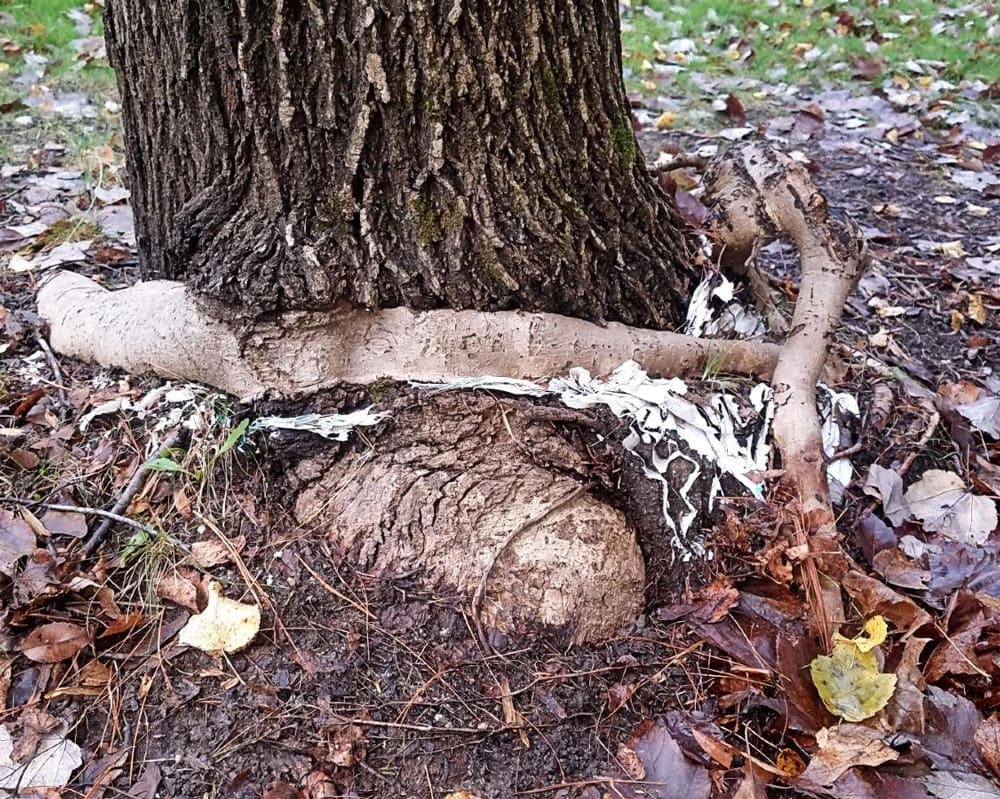
Healthy trees have intact bark. Bark that is peeling in large sheets, developing deep vertical cracks, or falling away from the trunk in chunks is often a sign of internal decay, disease, or cambial damage from frost or drought. Cankers — sunken, discolored, or dead areas of bark — are a particularly serious warning sign. They indicate fungal or bacterial infection that may be spreading through the wood.

Sign 3: Fungal Growth at the Base or on the Trunk

Shelf fungi (also called bracket fungi or conks) growing on the bark or at the base of a tree are almost always a sign of advanced internal decay. These fungi fruit only after they’ve been colonizing the interior wood for months or years. By the time you can see mushrooms, the structural integrity of the tree may already be compromised. A tree with visible fungal growth near the base should be assessed by a certified arborist for stability before the next storm season.

Sign 4: Leaning That Wasn’t There Before

Some trees naturally grow at an angle, and that’s usually not a cause for alarm. What’s concerning is a change in lean — when a tree that was once upright has gradually or suddenly shifted. Sudden lean after a storm often indicates root failure or soil heave. Gradual lean developing over months can signal root decay, structural weakness, or soil conditions that are undermining the anchor roots. If you notice soil cracking or lifting around the base of a leaning tree, treat it as an emergency and call immediately.

Sign 5: Unusual Leaf Drop or Discoloration

Leaves that turn yellow, brown, or drop prematurely outside of fall are telling you something is wrong. The pattern of discoloration matters. Yellowing that starts at leaf edges and progresses inward often indicates root stress, drought, or soil chemistry issues. Brown tips in mid-summer can signal drought stress, Verticillium wilt, or salt damage. Premature fall color followed by early leaf drop may indicate Verticillium wilt or root problems. Spots, lesions, or unusual markings on leaves often point to specific fungal diseases.

Sign 6: Epicormic Shoots and Watersprouts

Epicormic shoots are fast-growing, weak shoots that erupt from the main trunk or large branches. Watersprouts are similar growth along the interior of the crown. While some epicormic growth is normal after heavy pruning, a sudden proliferation of these shoots is often a stress response: the tree is sensing that it may lose its crown and is trying to produce emergency foliage. This is commonly seen in trees that have been topped, severely root-damaged, or are under attack from disease or pests.

Sign 7: Pest Activity — Holes, Sawdust, and Exit Galleries

Small D-shaped exit holes in the bark are a signature of Emerald Ash Borer, which has devastated ash tree populations across northern Illinois. Serpentine galleries just beneath the bark, sawdust-like frass at the base of the trunk, and woodpecker activity (birds often excavate bark to reach borer larvae) are all signs of active infestation. Bronze Birch Borer leaves similar evidence on birch trees. If you have ash or birch trees and notice any of these signs, call an arborist immediately — early detection dramatically improves the odds of saving the tree with systemic treatment.

Can a Dying Tree Be Saved?

It depends on what’s causing the decline and how far it has progressed. Trees with pest infestations caught early often respond well to systemic insecticide treatments. Trees with fungal diseases may be stabilized through pruning, fungicide applications, and improved soil conditions. Trees with severe structural decay or root failure generally cannot be made structurally sound again and should be removed before they fail. An ISA Certified Arborist can assess the tree, determine the cause of decline, and give you an honest recommendation about whether the tree can be saved and at what cost.

Get a Tree Health Assessment in the Rockford, IL Area

Tree Care Enterprises’ certified arborists diagnose and treat tree decline throughout the Stateline region. If you’re concerned about a tree on your property, don’t wait until it fails. Call 815-965-5757 or contact us online to schedule a free assessment.

Special Offer!

Concerned About a Sick or Dying Tree?

When it comes to tree disease, early detection makes all the difference. If you’ve noticed changes in your tree’s appearance or health, a professional assessment can help prevent further damage and protect your property.

  • Discolored or spotted leaves
  • Unusual leaf drop or thinning canopy
  • Cracks, cavities, or soft wood
  • Fungal growth near the base
  • Leaning or structural instability
If you're seeing any of these warning signs, it's time to have your trees evaluated by a trained professional.
14 Days Left!