![How Much Does Stump Grinding Cost? [2026 Rockford, IL Pricing Guide]](/_next/image?url=%2Fimages%2Fblog%2Fhow-much-does-stump-grinding-cost-rockford-il.jpg&w=1200&q=75&dpl=dpl_DYu1HB2g37MD6Hvub1aMwJZ6BVUv)
Stump grinding in the Rockford, IL area typically costs $75 to $600+ per stump, with most single stumps falling in the $100–$400 range. The price depends mostly on stump diameter, plus root spread, accessibility, and wood hardness. Combining stump grinding with a tree-removal visit usually lowers the per-stump cost by 20–30%. The full breakdown is below.
What Does Stump Grinding Cost in Rockford, IL?
After a tree is removed, you're left with a choice: leave the stump, grind it down, or attempt full extraction. Most homeowners in the Rockford, IL and Lake Geneva, WI area opt for stump grinding — "it's faster, more affordable, and less disruptive than full stump removal." This guide covers what you'll pay and what drives the price.
Average Stump Grinding Costs in the Rockford Area
- Small stumps (under 12 inches diameter): $75–$150
- Medium stumps (12–24 inches): $150–$250
- Large stumps (24–36 inches): $250–$400
- Very large stumps (36+ inches): $400–$600+
- Multiple stumps: Many companies charge per-inch or offer bulk discounts for 3 or more stumps on the same visit. Combining stump grinding with a tree removal visit typically reduces the per-stump cost by 20–30%.
What Affects the Price of Stump Grinding?
Stump Diameter
Diameter serves as the primary pricing variable. Larger stumps require additional grinding passes, extended machine operation, and generate significantly more wood chip debris. Pricing models vary—some companies use per-inch rates ($3–5), while others employ flat rates based on size categories.
Root Spread and Depth
Surface roots extending several feet from the trunk can increase grinding time. Requests to grind roots alongside the main stump incur additional charges proportional to root system extent.
Accessibility
Stump grinders are large, heavy machines. Obstacles like gates, hillsides, or surrounding structures complicate equipment positioning, potentially requiring slower, smaller machinery and extending labor time accordingly.
Wood Hardness
Hardwood species like oak and hickory require longer grinding periods than softer woods like poplar or cottonwood. Dense hardwood stumps should be budgeted with additional time considerations.
Stump Condition
Freshly cut stumps resist grinding more than older, partially decayed ones. Stumps sitting for several years may actually prove faster and less costly to grind.
Stump Grinding vs. Full Stump Removal
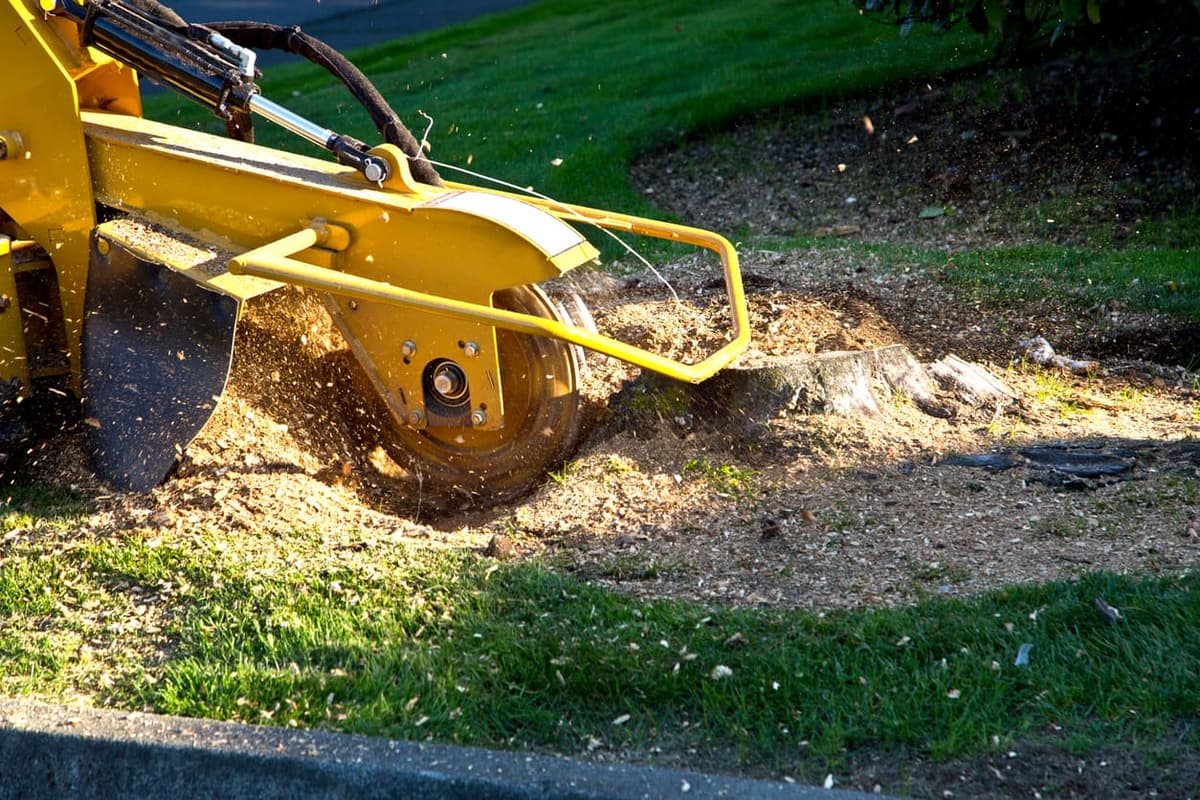
These services produce different outcomes. "Stump grinding uses a rotating cutting wheel to reduce the stump to wood chips 6–12 inches below ground level." The root system remains underground, decomposing over 5–10 years. Full removal excavates the entire root ball using heavy equipment, creating a hole requiring fill material.
For residential applications, grinding typically represents the optimal choice. It operates faster, costs less, minimizes yard disruption, and leaves behind wood chips usable as mulch. Full removal becomes necessary when planting new trees in identical locations or when construction activities require undisturbed soil.
What Happens to the Wood Chips?
Stump grinding produces substantial wood chip debris. Tree Care Enterprises offers three options: haul away the chips, spread them as mulch over the ground hole, or leave them piled for personal use in garden beds. Filling the hole with topsoil and seeding constitutes an additional service available for separate quotation.
Should You DIY Stump Grinding?
Equipment rental yards in the Rockford area offer stump grinders for $200–$350 daily. However, rental grinding demands significant physical effort, operator experience, and frequently results in incomplete work because homeowners underestimate root extent or grind insufficiently. The cost differential between rental and professional service rarely justifies the associated effort and injury risk.
Get a Free Stump Grinding Estimate in the Stateline Area
Tree Care Enterprises provides stump grinding in Rockford, Lake Geneva, WI, and surrounding communities. Crews can frequently combine stump grinding with scheduled tree work for operational efficiency. Contact the company at 815-965-5757 or online for complimentary estimates.