Does Timing Really Matter for Tree Trimming?
Yes — significantly. Trimming a tree at the wrong time of year doesn't just reduce results; it can actively harm the tree. For some species in northern Illinois, off-season pruning opens the door to devastating diseases. For others, it simply wastes the tree's stored energy at a critical moment in its growth cycle. This guide covers the ideal pruning windows for the trees most common in the Rockford, IL and Lake Geneva, WI area.
The General Rule for Illinois Trees
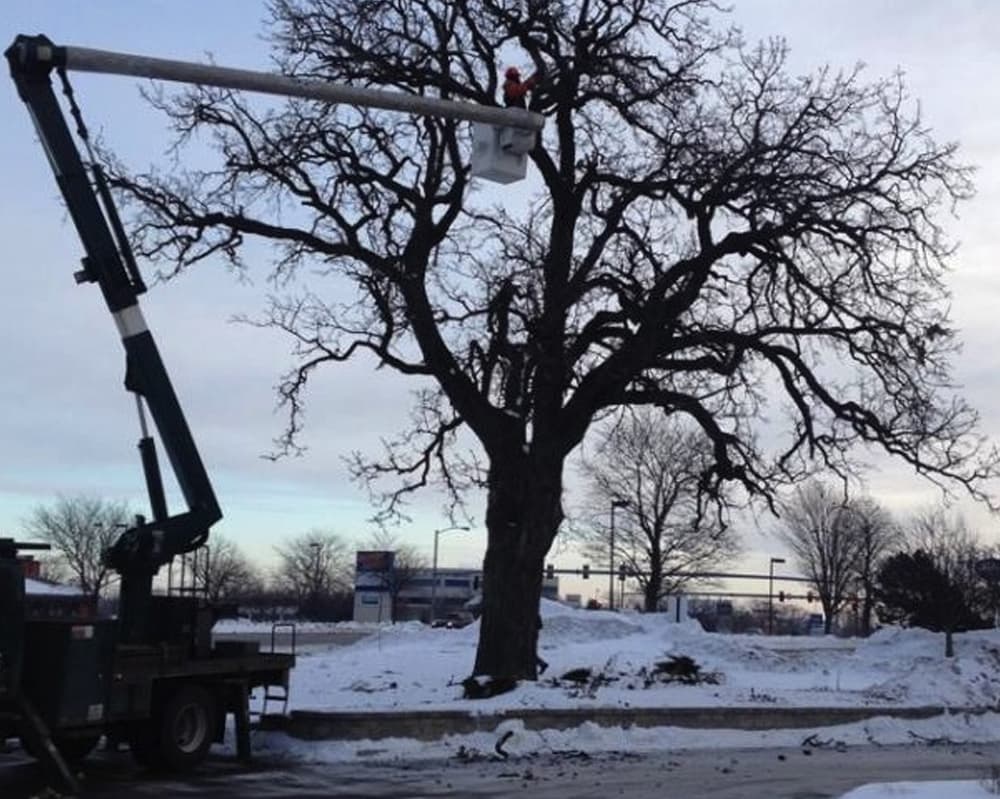
For most deciduous trees — oaks, maples, ashes, lindens, elms, birches — the optimal pruning window is late winter, from February through early April, just before the buds break and new growth begins. Here's why this timing works so well:
- The tree is dormant, so it's not actively spending energy on foliage. Pruning cuts heal quickly once spring growth begins.
- With leaves off, the branch structure is fully visible. Certified arborists can identify crossing branches, weak attachments, and structural issues that are hidden during the growing season.
- Insect populations that spread tree diseases are at their lowest in late winter, reducing the risk that fresh pruning wounds will be colonized.
- Frozen ground in early winter means equipment causes less damage to turf and roots.
Species-Specific Pruning Calendars
Oak Trees: Prune Only October through March
This is the most critical pruning rule in northern Illinois. Oak Wilt is a lethal fungal disease spread by sap beetles that are active from April through July. Fresh pruning wounds during this window attract these insects directly. A single infected oak can spread the disease through connected root systems, killing entire groves. Tree Care Enterprises will not prune oaks between April and September — this is not a preference, it's a public health practice for your neighborhood's tree canopy.
Elm Trees: Prune Only October through March
Dutch Elm Disease is another devastating fungal disease vectored by bark beetles that are most active in spring and summer. Like oak wilt, fresh cuts during the growing season invite infection. Prune elms in late dormancy only.
Crabapples and Fruit Trees: Prune Late Winter
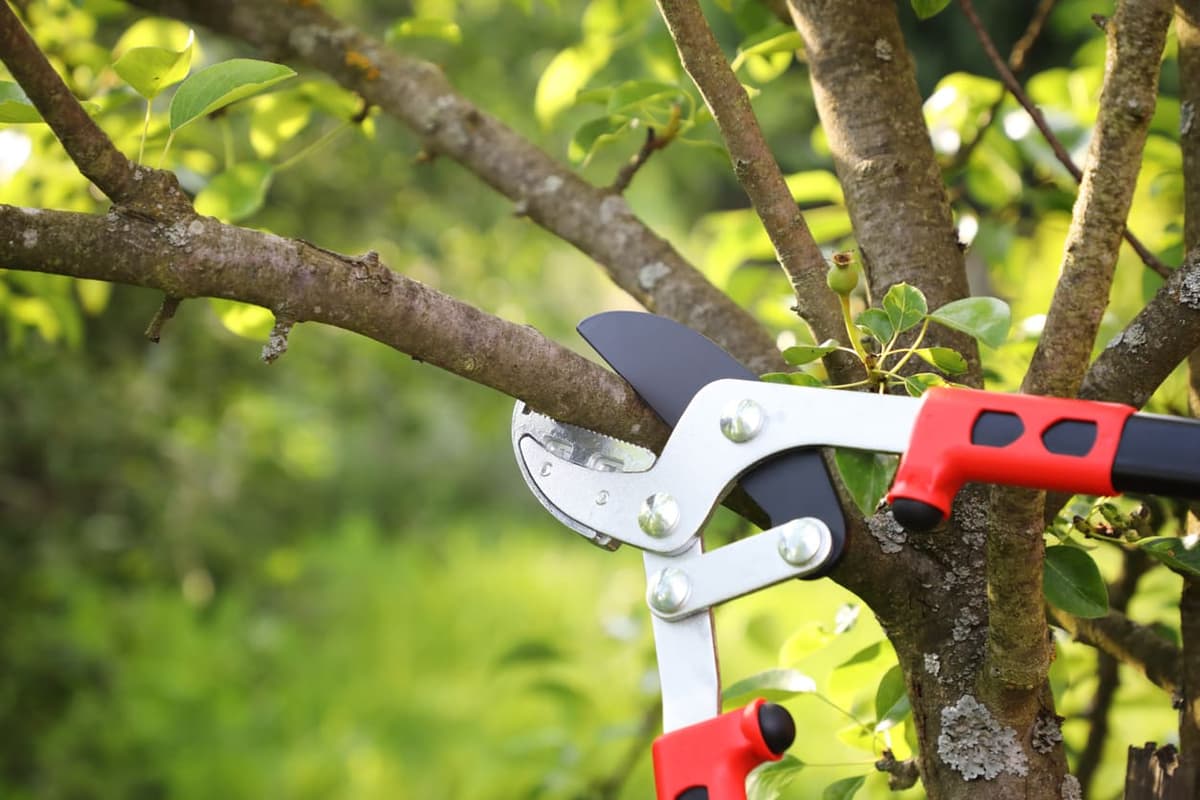
Crabapples are susceptible to Fire Blight, a bacterial disease that spreads through wounds during wet spring weather. Late winter pruning (before bloom) minimizes exposure. Pruning shears should be disinfected between cuts when working on susceptible trees.
Spruce and Pine: Prune in Late Spring
Conifers are best pruned in late spring after the new growth ("candles") has fully extended but before it fully hardens. This timing produces the most compact, natural-looking results. Blue spruce trees in Illinois are frequently affected by Rhizosphaera needle cast; if your spruce has interior needle loss, timing fungicide treatments alongside light pruning in spring improves outcomes.
Maples: Avoid Early Spring
Maples can be pruned in late winter or mid-to-late summer, but avoid pruning in early spring when sap flow is heaviest. While not dangerous, wounds made during peak sap flow bleed profusely and can attract insects. Midsummer pruning (July–August) is an acceptable alternative window once the tree has hardened off its new growth.
Birch Trees: Prune in Late Summer or Early Winter
Birch trees are highly susceptible to the Bronze Birch Borer, an insect that attacks stressed or recently wounded birches. Avoid pruning in spring and early summer when adult borers are actively seeking egg-laying sites. Late summer (August–September) or full dormancy (December–February) are the safest windows.
When Should You Trim for Safety Regardless of Season?
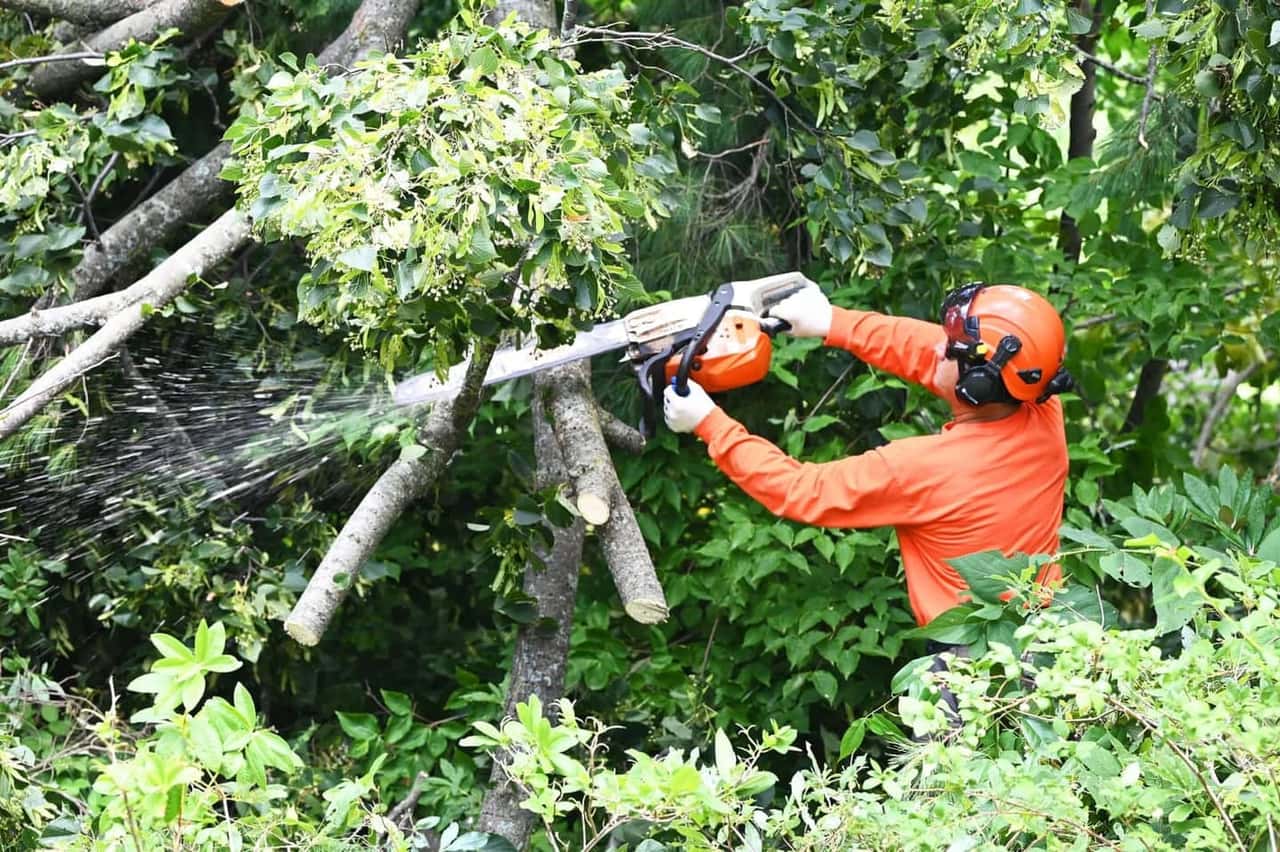
Safety pruning — removing dead, broken, or hazardous branches — should be done immediately regardless of season. A dead branch doesn't follow seasonal rules, and a branch that poses a risk to people or property can't wait until February. If you have a storm-damaged tree or a branch you're concerned about, call a certified arborist for an assessment. When a storm leaves a hazard that cannot be left standing overnight, Rockford emergency tree service is the right call.
Can You Trim Trees in Summer?
Light corrective pruning in summer is generally fine for most species once new growth has hardened (typically by mid-July in northern Illinois). However, heavy pruning during the growing season stresses trees by removing photosynthetically active foliage. As a rule, no more than 25% of a tree's crown should be removed at any time — and in summer, keeping that closer to 10–15% is prudent.
Schedule a Pruning Assessment with Our Certified Arborists
Tree Care Enterprises' ISA Certified Arborists are available year-round for pruning assessments and scheduled work. We handle everything from corrective pruning on young trees to crown reduction on mature specimens. Request a free estimate for tree trimming in Rockford, or see the crews and services on the Rockford tree care page. Call 815-965-5757.